Kinsuka Power: A 900 MW Private Hydropower Project
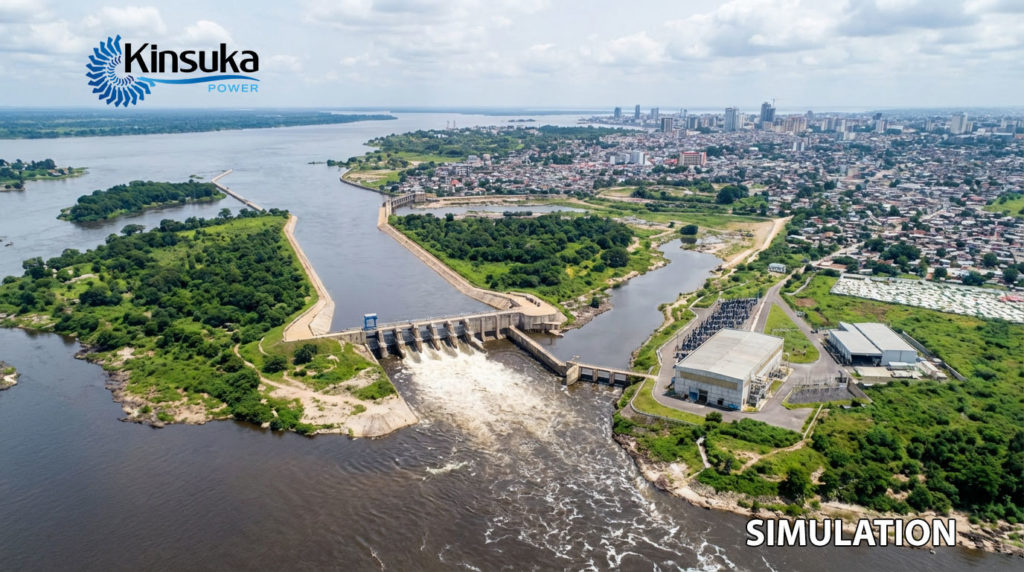 Kinsuka Power is a 900-megawatt hydropower project in the Democratic Republic of Congo (DRC). Located on the Congo River in Kinshasa, the project is designed to significantly increase the country’s electricity generation capacity and support long-term economic growth.
Developed as a private sector initiative, Kinsuka Power is led by a joint venture between Great Lake Energy, founded by Congolese entrepreneur Yves Kabongo, and Groupe Forrest International, through its energy subsidiary Congo Energy. Groupe Forrest is led by CEO Malta David Forrest, while Congo Energy is headed by CEO Spyros Giourgas.
The project is positioned as one of the largest privately developed hydropower initiatives currently underway in the DRC.
Strategic location on the Congo river
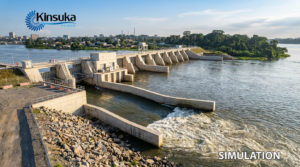 Kinsuka Power is situated near Kiudi Island, on the outskirts of Kinshasa. The site benefits from strong natural hydrological characteristics, including a series of rapids and an approximate 15-meter drop over a 10-kilometer stretch of the Congo River.
The development is designed as a run-of-river hydropower plant, a configuration that allows for continuous electricity generation while limiting large-scale water storage. This approach aims to balance energy production efficiency with environmental considerations.
According to project data, the plant is expected to generate approximately 7,450 GWh of electricity per year, contributing substantially to national grid stability.
Supporting Kinshasa and the mining industry
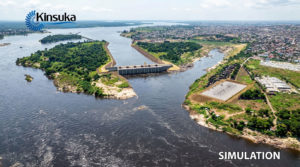 The electricity produced by Kinsuka Power is intended to serve two strategic areas:
-
Kinshasa, one of Africa’s fastest-growing capitals, where electricity demand continues to increase due to urban expansion and industrial activity.
-
The southern mining region, including Kolwezi in Lualaba Province, where energy-intensive copper and cobalt operations play a central role in the national economy.
The project includes transmission infrastructure designed to deliver power both to the capital and to industrial zones, strengthening the interconnection of key economic regions.
By addressing energy shortages, Kinsuka Power aims to contribute to improved grid reliability, enhanced industrial productivity, and increased competitiveness in the mining sector.
Technical studies and regulatory framework
Pre-feasibility studies for the project were conducted by Tractebel, an international engineering firm specializing in energy infrastructure. These studies assessed technical, environmental, and economic parameters and confirmed the viability of the site.
The project has obtained the required administrative and environmental authorizations in line with national regulations. Coordination with SNEL (Société Nationale d’Électricité) has been integrated into the project framework to ensure compatibility with the national transmission network.
The development timeline anticipates a multi-year construction phase following financial close.
A private sector approach to energy infrastructure
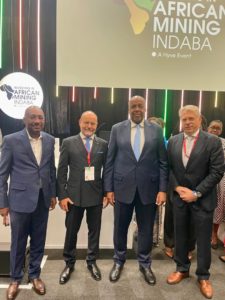 Kinsuka Power reflects a broader trend toward increased private sector participation in large-scale infrastructure development in Africa. The project is structured under a private joint venture model, with sponsors responsible for development, structuring, and implementation. Kinsuka Power is the result of a private initiative launched by Congolese entrepreneur Yves Kabongo, founder of Great Lake Energy, with the ambition of developing a sustainable energy infrastructure serving the national interest.
Led by Malta David Forrest, the Groupe Forrest International, a major industrial player in the Democratic Republic of Congo for over a century, contributes its expertise, local presence, and know-how through Congo Energy, headed by Spyros Giourgas and specializing in the development of energy projects in the DRC.
Energy as a foundation for economic growth
Energy access remains one of the key structural challenges facing the Democratic Republic of Congo. Expanding generation capacity is widely viewed as essential for:
-
Supporting industrialization
-
Improving urban electrification
-
Enhancing mining output and value creation
-
Attracting domestic and foreign investment
By adding 900 MW of installed capacity, Kinsuka Power represents a significant potential contribution to these national objectives.
As development progresses, the project is expected to play a role in strengthening energy security and supporting the DRC’s broader economic transformation agenda.
- Partager